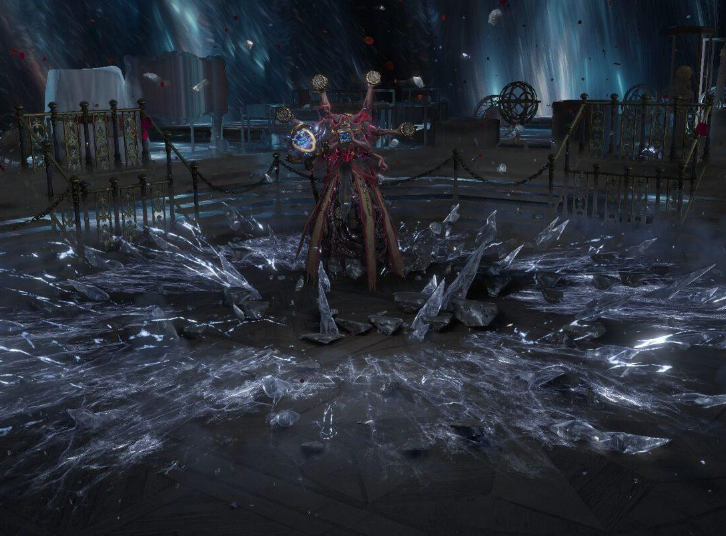
PoE 3.29 Voyage Board Profit Guide

Path of Exile 3.29’s Curse of the Allflame mechanic may appear simple at first, but the true depth comes from mastering the Voyage Board. Individual Chart runs are only the foundation. The real power comes from combining nine Charts into a carefully planned 3×3 board where every placement decision can influence the final rewards.

For players who want to maximize efficiency, understanding the board system is more important than simply clearing encounters quickly. A smart Voyage strategy can create a consistent source of valuable rewards and help generate more POE currency throughout the league.

The Voyage Board Is The Real Endgame

The biggest mistake many players make is treating Charts as isolated missions. While early Chart runs are useful for learning the mechanic and collecting resources, the long-term value comes from building optimized Voyages.

The 3×3 board turns preparation into a major part of gameplay. Chart placement affects nearby modifiers, while Corruption Currents create different reward paths across the board.

Successful players focus on:

  • Creating strong adjacency combinations.
  • Protecting valuable reward modifiers.
  • Balancing risk with potential profit.
  • Using Lanterns at the correct moment.

Instead of relying only on character power, the Voyage system rewards players who understand patterns and plan ahead.

How To Build A Profitable Voyage

A profitable Voyage is not created randomly. Players need to identify what type of rewards they want and design the board around that goal.

For example, players focusing on valuable drops may prioritize Quantity and Rarity combinations, while others may prefer crafting materials or league-specific rewards.

A basic strategy can be divided into stages:

StageGoalStrategy
Early ChartsLearn mechanicsComplete safe runs and collect resources
Board SetupBuild synergyPlace matching modifiers together
Advanced VoyagesMaximize rewardsCreate optimized chains and manage risks
Endgame FarmingRepeat profitable layoutsRefine successful patterns

This approach allows players to gradually improve instead of wasting resources trying to create perfect setups immediately.

Understanding Corruption Currents And Lantern Timing

Corruption Currents are one of the most important parts of advanced Voyage planning. Their direction can influence how rewards develop across the board, making placement decisions extremely valuable.

Experienced players do not simply place the highest-value Charts anywhere. They consider how each position affects the entire layout.

Allflame Lanterns also play an important role. They are not just emergency tools; they are strategic resources that allow players to survive dangerous moments and continue pushing deeper into the Voyage.

Good Lantern usage means:

  • Saving them for high-pressure encounters.
  • Protecting valuable progress.
  • Avoiding unnecessary resource waste.
  • Creating opportunities to finish difficult sections.

The Crafting Loop Creates Long-Term Value

Dead Man’s Sulphur and Ducats give the mechanic a complete economic cycle. Players collect resources through Voyages, use them for crafting opportunities, and reinvest profits into stronger strategies.

This creates a system where consistent engagement is rewarded. Unlike some mechanics that only provide occasional excitement, Voyage Board progression improves as players gain knowledge.

Valuable PoE Items also become an important part of this system because optimized crafting and trading decisions can significantly increase overall profit.

Why Voyage Board Scales Better Than Expected

At first, the Voyage system can feel slow because players need time to understand the rules. However, that learning investment becomes valuable later.

The mechanic rewards preparation, decision-making, and experience rather than simple speed. Players who understand board patterns will naturally outperform those who treat every Voyage as a random encounter.

Curse of the Allflame’s biggest strength is that it creates a reason to think before acting. The best rewards do not come from rushing faster; they come from building smarter.

For many players, the Voyage Board may start as a confusing system, but with enough practice it transforms into one of the most rewarding farming mechanics in Path of Exile 3.29. It is not just another activity to complete—it is a puzzle that turns planning into profit.
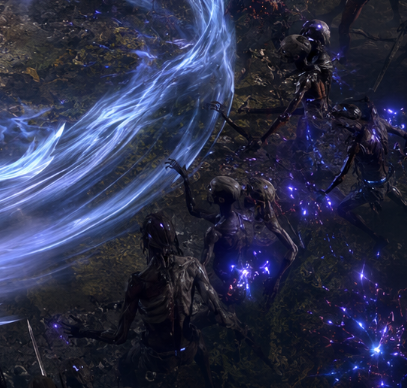
Martial Artist Unarmed Tempest Bell Build – PoE2 0.5 One-Shot Boss Meta Explained

Among the strongest boss-killing archetypes in Path of Exile 2 Patch 0.5, Martial Artist has emerged as one of the most explosive and unique options available. Unlike traditional melee builds that rely heavily on powerful weapons, Martial Artist embraces a pure unarmed combat style centered around combo generation and burst execution.

At the heart of the build lies Tempest Bell, a skill that has quickly become one of the defining mechanics of the current bossing meta.

The Core Mechanic: Tempest Bell

Tempest Bell functions as a combat amplifier that stores and converts damage generated through unarmed attacks. As players build combo stacks through rapid strikes, the bell accumulates resonance energy and prepares for a powerful release.

Rather than dealing immediate damage, the system rewards preparation and timing. The more efficiently players build and maintain their combo sequence, the greater the eventual burst potential becomes.

This creates a playstyle that feels fundamentally different from most conventional melee builds in PoE2.

Why Tempest Bell Enables One-Shot Bosses

The build’s incredible single-target damage comes from multiple layers of scaling working together.

Combo Stack Multiplication

Every successful attack contributes to combo generation, increasing the overall damage potential of future releases. Maintaining momentum becomes a critical part of maximizing performance.

Resonance Storage

Tempest Bell stores amplified damage throughout the buildup phase. Instead of spreading damage evenly over time, the build concentrates a massive amount of power into a single burst window.

Burst Conversion

Once activated, the stored energy is released in a devastating attack capable of deleting large portions of a boss’s health bar instantly. With proper optimization, many encounters can be completed before dangerous mechanics even become relevant.

The result is one of the highest burst-damage setups currently available in Patch 0.5.

League Start Advantages

One reason for the build’s growing popularity is its exceptional cost efficiency.

Many endgame builds require expensive weapons or rare item combinations before they feel powerful. Martial Artist avoids much of this dependency by scaling primarily through skill interactions, combo mechanics, and passive progression.

Because of this, players can achieve strong boss-killing performance with relatively modest gear investment.

For league starters looking to farm bosses early and generate Path of Exile 2 currency efficiently, this accessibility is a major advantage.

Combat Rotation and Playstyle

Despite its simplicity on paper, the build rewards skillful execution.

The basic combat loop consists of:

  • Building combo stacks through unarmed attacks
  • Positioning and placing Tempest Bell
  • Maintaining momentum during the setup phase
  • Triggering the release at the optimal damage window

Success depends heavily on timing, positioning, and understanding encounter mechanics. Players who master the rhythm of the build are rewarded with some of the most satisfying burst damage available in the game, making it a popular choice for efficient progression and for players looking to buy poe 2 currency to accelerate early gearing and smooth out the transition into mid-game content.

Martial Artist’s Tempest Bell build represents one of the biggest winners of the PoE2 0.5 meta. Its combination of massive burst damage, low gearing requirements, and efficient boss farming potential makes it an outstanding league starter.

Path of Exile 2 0.5 Introduces First Real League Challenge System with Runes of Aldur

Path of Exile 2 finally receives its first fully realized seasonal challenge system with Patch 0.5: Return of the Ancients. The new Runes of Aldur league gives players a far clearer sense of progression throughout the season, replacing endless map grinding with structured goals and meaningful cosmetic rewards.

For longtime ARPG fans, the system feels much closer to the classic league challenge format many players hoped Path of Exile 2 would eventually adopt POE 2 Orbs.

Knight of Aldur Armour Set Rewards

The new challenge system revolves around eight league challenges, each tied to exclusive cosmetic unlocks. Every two completed challenges reward another piece of the Knight of Aldur Armour Set:

  • 2 Challenges: First Armour Piece
  • 4 Challenges: Second Armour Piece
  • 6 Challenges: Third Armour Piece
  • 8 Challenges: Full Armour Set + Permanent Hideout Totem Decoration

The reward structure is simple but highly motivating, encouraging players to engage with every major system introduced in Patch 0.5.

Tracking progress is straightforward. Players can open the Challenges menu anytime by pressing H in-game to monitor completed objectives and remaining tasks.

While small on paper, this feature makes the entire league feel significantly more organized compared to earlier Path of Exile 2 versions. Instead of aimless farming, players always have clear long-term goals to pursue.

1. Runeseeker Challenge

Runeseeker focuses on the new rune crafting system. Players must discover increasingly difficult Runic Remnants while completing advanced multi-slot inscriptions using the new rune mechanics introduced in the league.

2. Hunter Challenge

Hunter sends players back across the campaign to defeat optional bosses, including encounters like:

  • The Crowbell
  • Great White One
  • Additional hidden bosses many players likely skipped during normal progression

This challenge encourages deeper exploration and rewards players for revisiting older areas with stronger characters.

3. Ascendant challenge

The Ascendant challenge marks a major difficulty spike.

To complete it, players must obtain all eight Ascendancy Points, including the difficult final Trials tied to Zarokh and the Trialmaster. Unlike earlier objectives, Ascendant forces players to engage with challenging endgame systems rather than remaining in safe early mapping content.

For many players, this will likely become one of the league’s biggest progression walls.

4. Reliquarian challenge

Not every challenge is brutally difficult. Patch 0.5 also includes more relaxed objectives that allow casual players to make consistent seasonal progress.

Reliquarian simply requires players to identify 50 Unique Items throughout the league.

5. Artisan challenge

Artisan revolves around using all 13 Verisium crafting ingredients obtained from Runic encounters.

These objectives provide steady advancement without requiring nonstop boss farming or high-end optimization every session.

6. Cartographer challenge

Cartographer is one of the largest time investments in the entire league challenge system.

The objective requires players to fully allocate the enormous Atlas Passive Tree, something that naturally takes substantial endgame progression. Defeating the Arbiter of Divinity multiple times can significantly accelerate completion, but the challenge is still designed as a long-term seasonal grind.

For dedicated players pushing deep into the Atlas, Cartographer will likely complete naturally over time.

7. Vanquisher challenge

The final challenge, The Vanquisher, is clearly aimed at elite endgame players.

To complete it, players must defeat three Pinnacle Bosses at maximum difficulty:

  • Vessel of Kulemak
  • The Bodach
  • Tangmazu

These encounters represent some of the hardest content currently available in Path of Exile 2 and are tied to major endgame mechanics including Abyss, Ritual, and Delirium.

Early in the league, completion rates for this challenge will likely remain extremely low.

Path of Exile 2 Patch 0.5 Feels Like a Major Turning Point

Return of the Ancients feels like a huge step forward for Path of Exile 2.

The new challenge system gives players clearer goals, better seasonal rewards, and stronger incentives to experience every part of the game instead of endlessly repeating the same farming strategy buy POE 2 Orbs. Whether players are chasing the full Knight of Aldur Armour Set or simply looking for a more structured seasonal experience, the Runes of Aldur league adds significantly more depth and replay value to Path of Exile 2.

With the league launching on May 29, 2026, Patch 0.5 is shaping up to be one of the game’s biggest and most important updates yet.

Unveiling the Memory Mechanism in Path of Exile 3.26

In the constantly evolving world of Path of Exile, new game mechanics always generate excitement and anticipation. The latest addition, the Memory mechanism (including Memory Corridor and Memory Map), has sparked lots of discussion among players. Some see it as a natural extension of previous features like Delirium and Sanctum. Plus, with the introduction of PoE 1 Currency, players are eager to explore how these new mechanics can be leveraged to enhance their builds and gameplay strategies.

The Memory Mechanism:
The Memory mechanism in Path of Exile 3.26 introduces players to a new way of navigating the game world. With the Memory Corridor and Memory Map, players are tasked with creating their own path through a series of connected memory fragments. As players progress through these fragments, they have the opportunity to uncover hidden secrets, encounter challenging foes, and ultimately reap valuable rewards.

Many players have drawn comparisons between the Memory mechanism and previous game features like Delirium and Sanctum.

While each of these mechanisms offers a unique gameplay experience, there are some similarities that can be seen. For example, Delirium challenges players to navigate through increasingly difficult levels of corruption, while Sanctum presents players with intricate puzzles to solve. The Memory mechanism, on the other hand, combines elements of exploration, strategy, and puzzle-solving, creating a new and engaging gameplay experience.

Exploring the Memory Corridor:
One of the key components of the Memory mechanism is the Memory Corridor, where players must navigate through a series of interconnected memory fragments. Each fragment presents its own set of challenges and rewards, giving players the opportunity to test their skills and ingenuity. By carefully planning their path through the Memory Corridor, players can maximize their rewards and uncover hidden treasures.

Unveiling the Memory Map:
Besides the Memory Corridor, players can also use the Memory Map to boost their gameplay. The Memory Map helps you keep track of your progress through the memory fragments, plan your route, and make smarter moves. By making good use of the Memory Map, you can optimize your gameplay and grab even better rewards.

The Memory mechanism in Path of Exile 3.26 brings a fresh and exciting experience to the game. While some folks might compare it to things like Delirium and Sanctum, it really stands out on its own as a unique and fun new feature.

Path of Exile: Unveiling the Riches – Exploring Kirac’s Vault Rewards

Path of Exile, with its vast and ever-evolving world, thrives on a constant cycle of challenging content and rewarding experiences. Central to this is the ongoing league, a fresh season that introduces new mechanics, challenges, and, crucially, opportunities to amass wealth and power. One of the most exciting aspects of any league is the chance to earn desirable rewards, and in the current iteration, Kirac’s Vault stands out as a compelling proposition.

What is Kirac’s Vault?

Introduced during the Sentinel League and a recurring feature in subsequent leagues, Kirac’s Vault offers Exile a unique way to earn valuable rewards tied to completing maps. It’s a mini-game within the broader mapping system. After completing maps, players earn Vault Keys. These keys can be used to access the vault, which contain an assortment of treasures.

Navigating the Vault: A Quick Guide

Entering Kirac’s Vault is rather straightforward. You accumulate Vault Keys by completing maps. The more maps you complete, the faster you’ll acquire keys.

Here’s a breakdown of the core gameplay loop:

Complete Maps: Your primary activity is tackling maps. The more maps you run, the better your chances will be of earning keys, which increase the frequency with which the Vault appears.

Acquire Vault Keys: Be on the lookout for these keys while doing maps.

Enter the Vault: Once you’ve gathered enough keys, you can enter the vault.

Claim Your Rewards: Inside the Vault, you’ll find various chests and rewards. From PoE 1 Currency and valuable equipment to unique items.

The Allure of the Rewards

Currency in u4gm: A variety of currency items are usually available, which can be used for crafting items and trading with other players.

Unique Items: Special, powerful pieces of gear with unique properties.

Maps: Additional maps to keep your mapping journey rolling.

Other Consumables: Items such as scarabs, divination cards.

While luck does play a role, there are ways to maximize your chances. It’s a solid mechanic that rewards dedicated mapping and provides an enjoyable break from the usual grind.Kirac’s Vault is an exciting game mechanic that offers a constant stream of rewards, making it a worthwhile activity for any player.