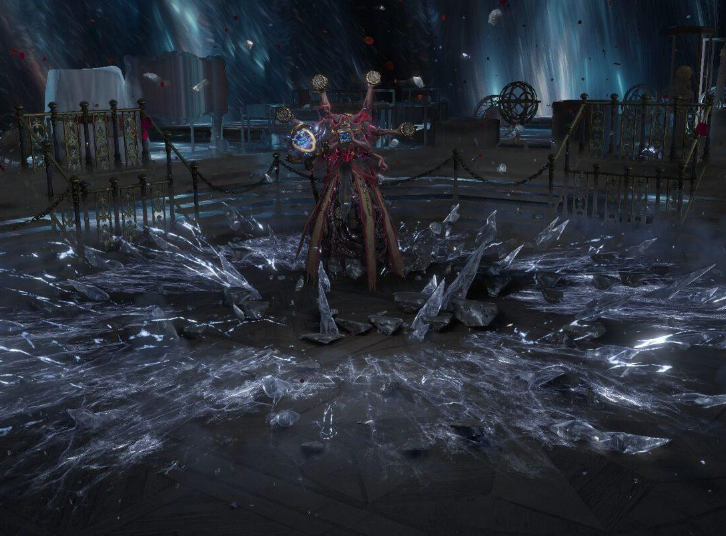
Dark and Darker Perfect Block Secrets

The combat system in Dark and Darker has become much more technical after the recent weapon blocking adjustments. Winning a melee fight is no longer only about damage numbers or better equipment. For players who master defensive timing, a single successful Perfect Block (Riposte) can completely change the outcome of a duel.

Whether you are using a Longsword or Shield, understanding attack animations, impact timing, and reaction windows is the difference between randomly blocking and consistently punishing opponents.

Players who practice these mechanics can improve their survival rate without constantly relying on expensive gear or large amounts of Dark and Darker Gold.

A common mistake is pressing block as soon as an enemy starts attacking.

This usually fails because most attacks have three important stages:

Attack StageWhat HappensPlayer Response
Startup FrameEnemy begins the attack animationWatch movement and weapon direction
Impact FrameWeapon reaches your hitboxActivate block at the correct timing
Recovery FrameEnemy finishes the attackUse Riposte opportunity

The goal is not blocking early. The goal is creating contact between the enemy weapon and your guard at the exact moment when the block system recognizes a successful defense.

Longsword Riposte: Turning Defense Into Damage

The Longsword is one of the best weapons for players who enjoy technical combat.

A successful Riposte requires confidence and patience. Many beginners hold block too early, allowing opponents to delay their attack or change timing.

The better method is reading the animation.

Watch the opponent’s shoulder movement, weapon position, and attack direction. Different weapons have different swing speeds, so the timing cannot be identical for every enemy.

Against slower weapons, wait longer before committing.

Against fast weapons, focus more on prediction rather than reaction.

Shield Blocking: Control the Fight Tempo

Shield users have a different advantage. Instead of looking only for a counterattack, the goal is controlling space.

A successful shield block can interrupt enemy pressure and create opportunities for repositioning.

Listen carefully during combat. The sound of a successful block is different from a normal hit. Visual effects also provide information, especially the impact sparks that appear when your guard connects correctly.

These signals help players build muscle memory.

Training Your Timing Through Repetition

Perfect Block is not something players master by reading guides alone. It requires repeated practice against different attack patterns.

Focus on one weapon type at a time.

Learn its swing speed.

Practice blocking only at the final moment.

Repeat until the timing becomes automatic.

The goal is creating a natural reaction instead of consciously calculating every attack.

Gear Preparation and Mechanical Skill

While skill is the foundation of melee combat, having the right equipment still matters. Players who want to test different builds and practice advanced setups often prepare multiple loadouts.

Managing resources efficiently allows more training opportunities, and some players choose to use Dark and Darker Gold for sale options to quickly create practice gear without slowing down progression.

Perfect Blocking is one of the most rewarding mechanics in Dark and Darker. A player who understands timing can defeat stronger opponents by making better decisions rather than simply having better equipment.

Master the attack frames, learn the sound cues, and train your reactions until blocking becomes instinct.

In Season 10, the best fighters are not always the ones who attack first. They are the ones who know exactly when to defend — and when to strike back.

Diablo 4 Season 14 Off Meta Build Showcase

In Diablo 4 Season 14, it is easy to fall into the trap of following the same tier lists, copying the same meta builds, and watching every Barbarian spin through the same Whirlwind loop. While those builds are effective, they are also everywhere. If you are starting to feel like every dungeon looks the same, it might be time to step away from the cookie-cutter meta and explore the more creative side of Sanctuary.

This season actually rewards experimentation more than most players realize. With flexible scaling systems and strong synergy between skills and Diablo 4 items, off-meta builds can still clear endgame content if properly optimized. Some players even experiment with targeted gearing or buy Diablo 4 items approaches to quickly complete unusual setups and test new mechanics faster.

Below are three creative builds that are shaking up Season 14 in unexpected ways.

Build 1: Firewall Sorcerer (Burn Everything Slowly)

The Firewall Sorcerer is one of the most visually satisfying off-meta builds in the game right now. Instead of focusing on burst damage, it leans into massive area denial and damage-over-time scaling.

Once set up correctly, entire screens become covered in burning zones that continuously tick enemies down. The beauty of this build is its safety—players can control space while enemies melt before ever reaching melee range.

Key strengths include:

Extremely safe ranged playstyle
Strong scaling with DoT multipliers
High visual clarity and screen control

It may not be the fastest burst build, but it offers one of the most relaxing and consistent farming experiences in the game.

Build 2: Pestilence Swarm Spiritborn (Green Screen Chaos)

If Firewall Sorcerer is about control, Pestilence Swarm Spiritborn is about chaos.

This build focuses on ultra-fast mobility combined with poison-based swarm mechanics that turn the entire battlefield into a green blur of damage. You are constantly moving, constantly applying pressure, and rarely standing still.

Key strengths include:

Extremely high mobility and tempo
Massive screen-wide poison application
Strong synergy with fast-clear farming routes

When fully optimized with the right Diablo 4 items, this build becomes a nonstop movement engine that clears entire zones without slowing down.

Build 3: Chain Reaction Necromancer (Bonus Mention)

While not as flashy as the other two, this Necromancer variant focuses on cascading corpse explosions and chain reactions that spread across entire packs. It rewards timing and positioning rather than brute force, and feels incredibly satisfying when everything detonates at once.

Meta builds will always exist in Diablo 4 Season 14, but they are not the only way to play. Some of the most enjoyable experiences come from stepping outside the standard tier lists and building something unexpected.

Whether you are experimenting with DoT-heavy Sorcerer setups, mobility-focused Spiritborn builds, or unconventional Necromancer chains, the game rewards creativity more than ever.

College Football 27 Dynasty Mode: NIL System Completely Rewrites Recruiting Strategy

College Football 27 introduces one of the most transformative dynasty mode systems the series has ever seen: a fully simulated Name, Image, and Likeness (NIL) economy. This system fundamentally changes recruiting, roster retention, and transfer portal dynamics by tying every player’s value to evolving financial expectations rather than static ratings or simple scholarship offers.

For players who also engage with the in-game economy, resources like College Football 27 Coins will naturally become part of broader roster-building strategies, especially when managing long-term dynasty commitments and competitive online leagues.

NIL Expectations Are Now the Core of Recruiting

At the heart of College Football 27’s dynasty overhaul is a simple but powerful idea: every player now has an “expected NIL value.”

This value is not universal. It fluctuates based on:

  • School prestige
  • Player star rating
  • Position value (QB and premium positions demand more)
  • Dealbreakers and motivations
  • Brand exposure preferences
  • Coaching and program perks

A 5-star quarterback recruiting battle between a powerhouse program and a smaller school is no longer just about ratings or depth charts. The smaller program may need to offer significantly higher NIL compensation just to stay competitive, reflecting real-world recruiting economics.

Dynamic Expectations That Grow Over Time

One of the most important changes is that NIL expectations are no longer fixed.

A player can:

  • Increase their NIL demand after a breakout season
  • Request more money after awards or improved overall rating
  • Adjust expectations based on team success or role
  • Threaten transfer portal entry if underpaid

This creates a living contract system. A freshman might accept a modest deal, but by junior year, a star performer could demand exponentially more.

This is where dynasty budgeting becomes a long-term strategy rather than a one-time recruiting decision.

The Risk-Reward System of Overpaying Early

College Football 27 introduces a strategic dilemma: overpaying early can secure elite recruits—but it can also destabilize your entire roster budget later.

For example:

  • Offering 200% of a recruit’s baseline NIL may instantly win recruiting battles
  • But that same player’s future expectations will scale from that inflated starting point
  • By the time they become a star, they may demand unsustainable compensation

This creates a “compound contract effect” where early decisions directly shape future salary pressure across your roster.

Transfer Portal Becomes a Financial Battlefield

The transfer portal is now heavily NIL-driven. Unlike high school recruiting, where relationships and scouting still matter, transfers are much more transactional:

  • Players already know their value
  • Playing time and money dominate decisions
  • Negotiation windows are shorter and more aggressive

If your program cannot match evolving expectations, even elite starters can leave mid-dynasty.

Roster Management and Budget Compression

Another major system change is roster-wide NIL management. Every player now has:

  • Expected NIL value
  • Current NIL compensation
  • Satisfaction and retention risk

This forces constant roster optimization. Coaches must decide:

  • Who is worth extending financially
  • Who should be replaced by younger, cheaper talent
  • Where to allocate limited NIL resources (QB vs OL vs depth)

A single superstar quarterback can now consume a disproportionate share of your NIL budget, forcing sacrifices elsewhere.

Recruiting Strategy Shift: Scouting First, Spending Second

Unlike previous entries, College Football 27 separates scouting from recruitment more strictly:

  • Preseason is dedicated entirely to scouting
  • Scholarships now include NIL considerations immediately
  • Blind mass-offering is no longer viable

This makes early-season evaluation more important than ever. Misreading a recruit’s value can result in long-term budget inefficiency that takes multiple seasons to correct.

Weekly NIL Adjustments and Influence System

Recruiting battles now evolve week-to-week based on NIL adjustments:

  • Meeting expected NIL boosts interest gain
  • Underpaying reduces weekly influence
  • Overpaying increases interest—but raises long-term cost floor

There is even a cap on weekly influence bonuses for aggressive bidding, creating diminishing returns on excessive spending.

This ensures NIL strategy is not just about winning recruits—but winning them efficiently.

Long-Term Dynasty Implications

The NIL system effectively turns dynasty mode into a financial simulation layered over traditional football management. Success now depends on:

  • Budget forecasting across multiple seasons
  • Strategic overpayment only when necessary
  • Retention planning for rising stars
  • Balanced roster investment instead of superstar stacking

For players who also track in-game progression and resource optimization, even external systems like Buy CFB 27 Coins often get discussed in the context of accelerating roster experimentation and dynasty rebuilding strategies.

Conclusion

College Football 27’s NIL system is not just a feature—it is a structural redesign of dynasty mode itself. Recruiting is no longer about simply identifying talent, but about predicting financial trajectories and managing long-term roster economics.

Programs that adapt early will gain a massive advantage. Those that treat NIL like a traditional scholarship system will quickly find themselves outpaced, outbid, and out-recruited in an increasingly complex collegiate football ecosystem.

Game Changing Black Tech Grow a Garden 2 Secrets Tips Infinite Sheckles

In the competitive economy of Grow a Garden 2, standard farming methods are no longer enough to keep up with top-tier players. To truly dominate servers and scale toward infinite Sheckles, players rely on advanced mechanics, timing strategies, and high-efficiency resource optimization.

High Efficiency Growth Timing Strategy

One of the most important advanced concepts is growth timing control. Instead of harvesting crops immediately at maturity, experienced players focus on optimizing environmental cycles such as day and night transitions.

By aligning harvest timing with in-game multipliers and server state changes, players can maximize mutation chances and overall yield value. Crops like Moon Bloom and Dragon’s Breath benefit heavily from precise timing, especially when managed in fully optimized sprinkler layouts.

Market Rotation and Server Optimization

Another core strategy involves smart server rotation and shop timing efficiency. High-level players avoid crowded servers and instead target fresh or low-competition instances to gain faster access to limited stock items.

This is where trading intelligence becomes critical. Many players actively monitor Grow a Garden 2 Items availability and reposition themselves to secure high-demand seeds before the market becomes saturated. Others engage in trading ecosystems where Grow a Garden 2 Items for sale listings are used to quickly scale inventory and unlock premium progression paths.

Automated Farming and Layout Efficiency

Passive income scaling depends heavily on layout design. The most effective farms use compact, fully optimized sprinkler coverage systems that ensure every crop remains at maximum growth efficiency.

Master Sprinklers and stacked irrigation zones allow players to maintain constant hydration without manual intervention. This reduces downtime and increases total mutation roll frequency, which is essential for long-term wealth generation.

When combined with high-value crops, this system turns a simple garden into a continuous production engine.

Mutation Scaling and Value Multipliers

The real financial breakthrough comes from mutation stacking. By combining environmental timing, optimized layouts, and high-tier boosts, players can significantly increase the probability of rare Gold and Rainbow variants.

These high-value outputs are the backbone of endgame progression. Once stabilized, mutation cycles create exponential income growth that quickly outpaces traditional farming methods.

To reach true infinite Sheckles potential, players must combine three systems: timing optimization, automated production, and market efficiency. High-tier Grow a Garden 2 Items accelerate progression speed, while active trading using Grow a Garden 2 Items for sale listings provides rapid access to rare upgrades.

Martial Artist Unarmed Tempest Bell Build – PoE2 0.5 One-Shot Boss Meta Explained

Among the strongest boss-killing archetypes in Path of Exile 2 Patch 0.5, Martial Artist has emerged as one of the most explosive and unique options available. Unlike traditional melee builds that rely heavily on powerful weapons, Martial Artist embraces a pure unarmed combat style centered around combo generation and burst execution.

At the heart of the build lies Tempest Bell, a skill that has quickly become one of the defining mechanics of the current bossing meta.

The Core Mechanic: Tempest Bell

Tempest Bell functions as a combat amplifier that stores and converts damage generated through unarmed attacks. As players build combo stacks through rapid strikes, the bell accumulates resonance energy and prepares for a powerful release.

Rather than dealing immediate damage, the system rewards preparation and timing. The more efficiently players build and maintain their combo sequence, the greater the eventual burst potential becomes.

This creates a playstyle that feels fundamentally different from most conventional melee builds in PoE2.

Why Tempest Bell Enables One-Shot Bosses

The build’s incredible single-target damage comes from multiple layers of scaling working together.

Combo Stack Multiplication

Every successful attack contributes to combo generation, increasing the overall damage potential of future releases. Maintaining momentum becomes a critical part of maximizing performance.

Resonance Storage

Tempest Bell stores amplified damage throughout the buildup phase. Instead of spreading damage evenly over time, the build concentrates a massive amount of power into a single burst window.

Burst Conversion

Once activated, the stored energy is released in a devastating attack capable of deleting large portions of a boss’s health bar instantly. With proper optimization, many encounters can be completed before dangerous mechanics even become relevant.

The result is one of the highest burst-damage setups currently available in Patch 0.5.

League Start Advantages

One reason for the build’s growing popularity is its exceptional cost efficiency.

Many endgame builds require expensive weapons or rare item combinations before they feel powerful. Martial Artist avoids much of this dependency by scaling primarily through skill interactions, combo mechanics, and passive progression.

Because of this, players can achieve strong boss-killing performance with relatively modest gear investment.

For league starters looking to farm bosses early and generate Path of Exile 2 currency efficiently, this accessibility is a major advantage.

Combat Rotation and Playstyle

Despite its simplicity on paper, the build rewards skillful execution.

The basic combat loop consists of:

  • Building combo stacks through unarmed attacks
  • Positioning and placing Tempest Bell
  • Maintaining momentum during the setup phase
  • Triggering the release at the optimal damage window

Success depends heavily on timing, positioning, and understanding encounter mechanics. Players who master the rhythm of the build are rewarded with some of the most satisfying burst damage available in the game, making it a popular choice for efficient progression and for players looking to buy poe 2 currency to accelerate early gearing and smooth out the transition into mid-game content.

Martial Artist’s Tempest Bell build represents one of the biggest winners of the PoE2 0.5 meta. Its combination of massive burst damage, low gearing requirements, and efficient boss farming potential makes it an outstanding league starter.